


Why Water Heater Maintenance in Comfort, TX Matters More Than You Think
Water heater maintenance in Comfort, TX is something most homeowners don’t think about until they’re standing in a cold shower or staring at a puddle on the utility room floor. Here’s a quick answer if that’s where you are right now:
Quick answers for Comfort, TX homeowners:
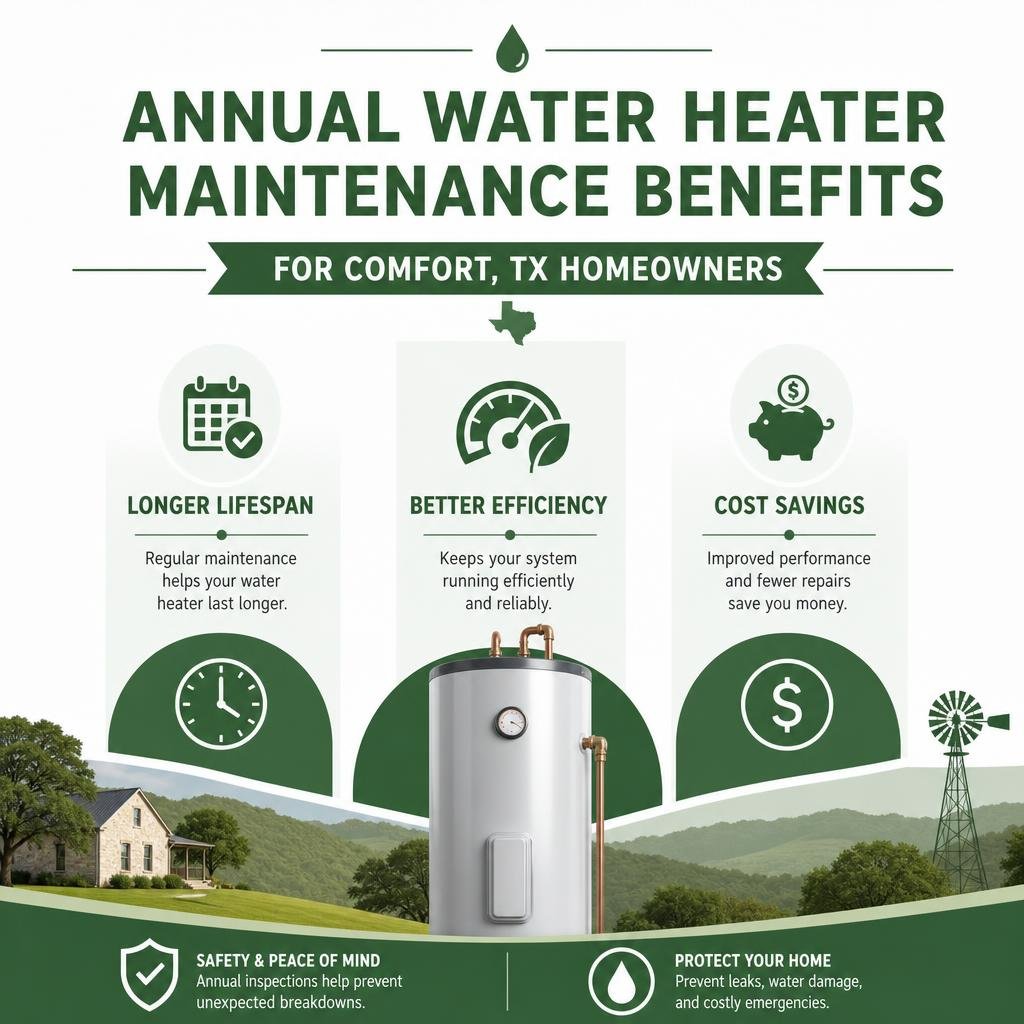
- Annual professional maintenance is the single most important thing you can do for your water heater
- Flush sediment from the tank every year to prevent efficiency loss and overheating
- Inspect the anode rod every 2–3 years and replace it before it fails
- Test the TPR (temperature and pressure relief) valve annually; it’s a critical safety component
- Watch for warning signs like rumbling noises, rusty water, lukewarm output, or rising energy bills
Water heating accounts for nearly 20% of your home’s total energy use. That’s a big slice of your utility bill riding on a piece of equipment most people ignore until it breaks. A neglected water heater can fail in as few as 6–8 years. A well-maintained one can last 10–15 years or longer.
In Comfort and the surrounding Texas Hill Country, hard water is a real factor. Mineral-rich water accelerates sediment buildup and shortens equipment life faster than the national average. That makes routine maintenance here more important, not less.
At Holloway Plumbing, our licensed team has spent decades providing plumbing services throughout the Texas Hill Country, including servicing hundreds of water heaters in Comfort, TX homes and surrounding communities. Over the years, we’ve seen firsthand how a simple annual tune-up can extend the life of a water heater and help homeowners avoid costly emergency repairs.
Essential Steps for Water Heater Maintenance Comfort Homeowners Can Follow
While we always recommend having a licensed professional handle your annual tune-up, there are several key steps you can learn about to understand what goes on under the hood of your system. Taking care of these components keeps your home safe and ensures your monthly utility bills don’t climb unnecessarily.
1. Flushing the Sediment
Because our water in the Texas Hill Country is rich in calcium and magnesium, sediment settles at the bottom of tank-style heaters. This layer of scale acts as a thermal barrier. Your burner or heating element has to work twice as hard to heat the water through this thick crust, which can reduce your system’s efficiency by up to 30%. Over time, this extra thermal stress can cause the bottom of your tank to overheat and weaken, eventually leading to a catastrophic split.
2. Testing the Temperature and Pressure Relief (TPR) Valve
The TPR valve is your water heater’s ultimate safety net. If your thermostat fails and the water inside the tank begins to boil, pressure builds rapidly. The TPR valve is designed to open automatically and release this pressure safely. During a standard maintenance visit, we lift the test lever to ensure water flows out freely and stops immediately when released. If a valve is stuck or leaking, it must be replaced immediately to prevent dangerous pressure levels.
3. Calibrating the Thermostat
We generally recommend setting your water heater thermostat to 120°F. Many manufacturers ship units set to 140°F, which increases standby energy loss and poses a serious scalding risk, especially for young children and seniors. Dropping the temperature to 120°F keeps your family safe, slows down mineral scale buildup, and saves you money on your monthly energy bills.
4. Inspecting the Sacrificial Anode Rod
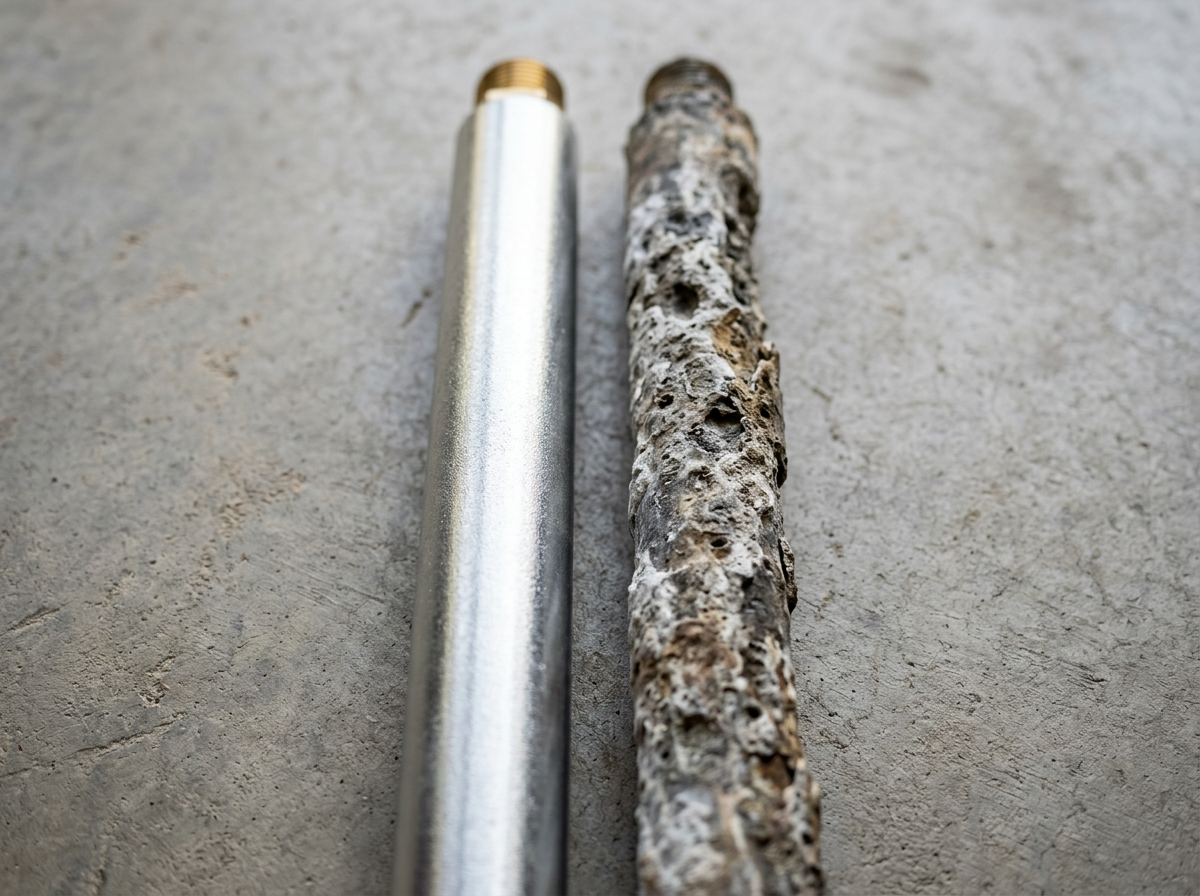
The anode rod is a magnesium or aluminum rod suspended inside your tank. Its sole job is to attract corrosive elements in the water so they attack the rod instead of your steel tank lining. Once this “sacrificial” rod is completely eaten away, the corrosive minerals turn their attention to your tank.
If you ignore these maintenance steps, you risk dealing with major structural leaks. If you are already noticing moisture around the base of your unit, it is crucial to understand the troubles behind a leaking water heater and trace exactly why your water heater is leaking before the damage spreads to your flooring and drywall.
Tank vs. Tankless Water Heater Maintenance Needs
The debate between traditional storage tank water heaters and tankless systems often comes down to upfront costs versus long-term efficiency. However, their maintenance requirements are also vastly different.
Traditional tank-style water heaters, holding anywhere from 20 to 80 gallons, typically last between 10 to 15 years with regular care. Tankless systems, which heat water on demand using high-powered burners or electric elements, can easily last 20 years or more if they are properly maintained.
The primary threat to a tankless water heater in the Texas Hill Country is hard water scale. Because tankless units rely on tight copper heat exchangers to flash-heat water instantly, even a thin layer of calcium buildup can restrict water flow, cause the unit to overheat, and trigger system error codes.
| Maintenance Task | Traditional Tank Water Heater | Tankless Water Heater |
|---|---|---|
| Flushing Frequency | Annually (to remove loose sediment) | Annually (using a vinegar solution to dissolve scale) |
| Anode Rod Replacement | Check every 2–3 years; replace as needed | Not applicable (no tank to protect) |
| In-Line Filter Cleaning | Not applicable | Clean quarterly (to remove pipe debris) |
| TPR Valve Testing | Annually | Annually |
| Average Lifespan | 10–15 years | 20+ years |
For tank and tankless systems alike, our water heater services in Kerrville, TX and Comfort help homeowners stay ahead of sediment, safety concerns, and efficiency problems before they turn into emergencies. Comfort homeowners can also rely on our local plumbing service team for annual maintenance, troubleshooting, and repair support throughout the Texas Hill Country.
To keep your high-efficiency unit running smoothly, scheduling annual tankless maintenance is highly recommended. Learning why tankless water heaters need service and how to plan annual tankless water heater maintenance can help you avoid unexpected cold showers and protect your investment.
For homeowners utilizing specialized heating setups, such as indirect systems connected to a home boiler, following manufacturer guidelines is essential. You can consult the Comfort indirect fired water heater manual to review proper operating pressures, clearances, and specific single-wall heat exchanger requirements.
Signs You Need Professional Water Heater Maintenance Comfort Services
Your water heater rarely fails without warning. Usually, it sends out subtle distress signals long before it completely stops working. Keeping an eye out for these indicators can save you from a costly, messy cleanup:
- Strange Rumbling or Popping Noises: If your water heater sounds like it is boiling rocks, that is the sound of sediment overheating at the bottom of the tank. As steam bubbles escape through the crust of hard water scale, they pop loudly.
- Discolored or Rusty Water: If your hot water runs red, brown, or rusty, but your cold water runs clear, your tank’s internal lining or anode rod is likely corroding.
- Lukewarm or Inconsistent Water: If your hot water runs out halfway through a shower, one of your heating elements in electric models or the burner assembly in gas models is likely failing.
- Fluctuating Water Pressure: Heavy sediment buildup can choke the hot water outlet valve, leading to a noticeable drop in hot water pressure compared to your cold water lines.
If you experience a sudden loss of hot water, knowing what to do when hot water suddenly stops working can help you safely troubleshoot the issue before calling in our professional team. If the problem involves active leaking, flooding, or another urgent plumbing issue, our emergency plumbing repairs team can respond quickly to help limit damage.
Special Considerations for Tankless Systems in Older Homes
If you live in one of the beautiful historic properties in Comfort, Fredericksburg, or Kerrville, retrofitting a tankless water heater requires careful planning. Older homes were not originally designed with the utility infrastructure that modern tankless units demand.
First, gas-fired tankless units require a significant volume of fuel to flash-heat water instantly. This often means upgrading your gas line from a standard 1/2-inch pipe to a 3/4-inch line. Second, venting is a major consideration. Unlike older tank heaters that vent naturally up a brick chimney, high-efficiency tankless systems utilize power-venting systems that must exhaust horizontally through an exterior wall using specialized PVC or stainless steel piping.
Before making the transition, it is wise to research tankless water heater issues in older homes and learn exactly what to know before installing a tankless water heater to ensure your home’s electrical and gas systems can handle the upgrade.
How Regular Maintenance Extends Lifespan and Efficiency
Think of your water heater like your car. You wouldn’t dream of driving 50,000 miles without changing the oil, yet water heaters often run for years without a single checkup.
Regular maintenance directly combats the two primary enemies of water heater efficiency: standby heat loss and thermal stress. Standby heat loss occurs when heat escapes from the tank into the surrounding room, forcing the system to cycle on repeatedly even when no one is using hot water. Insulating older tanks and checking thermostat calibration can reduce these standby losses significantly.
Furthermore, when sediment is allowed to accumulate, the burner must run longer and hotter to heat the water. This continuous overheating subjects the steel tank to extreme thermal expansion and contraction, which eventually cracks the protective glass lining of the tank. Once the water touches raw steel, rust begins, and the countdown to a complete tank replacement starts.
By staying proactive with tankless water heater service or traditional tank flushes, you protect your wallet from premature replacement costs and keep your monthly utility bills as low as possible.
Frequently Asked Questions
How Often Should You Schedule Water Heater Maintenance Comfort Experts Recommend?
In Comfort, TX and the surrounding Hill Country, we highly recommend scheduling professional water heater maintenance at least once a year. Because our local water contains high levels of limestone and minerals, sediment builds up much faster here than in other parts of the country. Regular service is also crucial for maintaining your manufacturer’s warranty, as many modern brands require documented annual maintenance to honor parts replacement claims.
Whether you need a quick system flush or a complete inspection, you can find reliable help across our entire Comfort plumber service areas.
What role does the sacrificial anode rod play?
The sacrificial anode rod is your water heater’s primary defense against rust. Made of magnesium, aluminum, or zinc, it is designed to corrode faster than the steel tank itself. Corrosive elements in the water naturally attack the anode rod first. We recommend inspecting the rod every 2 to 3 years. If more than six inches of the core wire is exposed, or if the rod is covered in thick calcium scale, it is time to replace it. Spending a little on a new anode rod can easily save you thousands on a premature tank replacement.
How does sediment buildup affect water heater performance?
Sediment buildup acts as an insulating blanket at the bottom of your tank, blocking heat from reaching the water. This forces your system to run longer, increasing your energy bills and placing excessive thermal stress on the tank’s metal base. Additionally, sediment can create localized hot spots that damage the protective inner glass lining of your tank, eventually causing it to rust and leak.
Conclusion
Your water heater is the unsung hero of your household comfort. By investing in annual water heater maintenance in Comfort, you can enjoy lower energy bills, consistent water temperatures, and the peace of mind that comes with knowing your home is safe from unexpected water damage.
At Holloway Plumbing, we have spent nearly 50 years providing fast, reliable, and expert plumbing services to our neighbors throughout the Texas Hill Country. From routine maintenance and system flushes to 24/7 emergency repairs, our licensed team is always ready to help.
Don’t wait for your hot water to run cold. Contact our professional water heater technicians and let our family take care of yours!