


When a Slab Leak Strikes: Why Epoxy Pipe Lining Changes Everything
Epoxy pipe lining for a slab leak is one of the most effective ways to fix a leaking pipe buried under your home’s concrete foundation, without breaking up your floor.
Here’s the quick answer if you need it fast:
What is epoxy pipe lining for a slab leak?
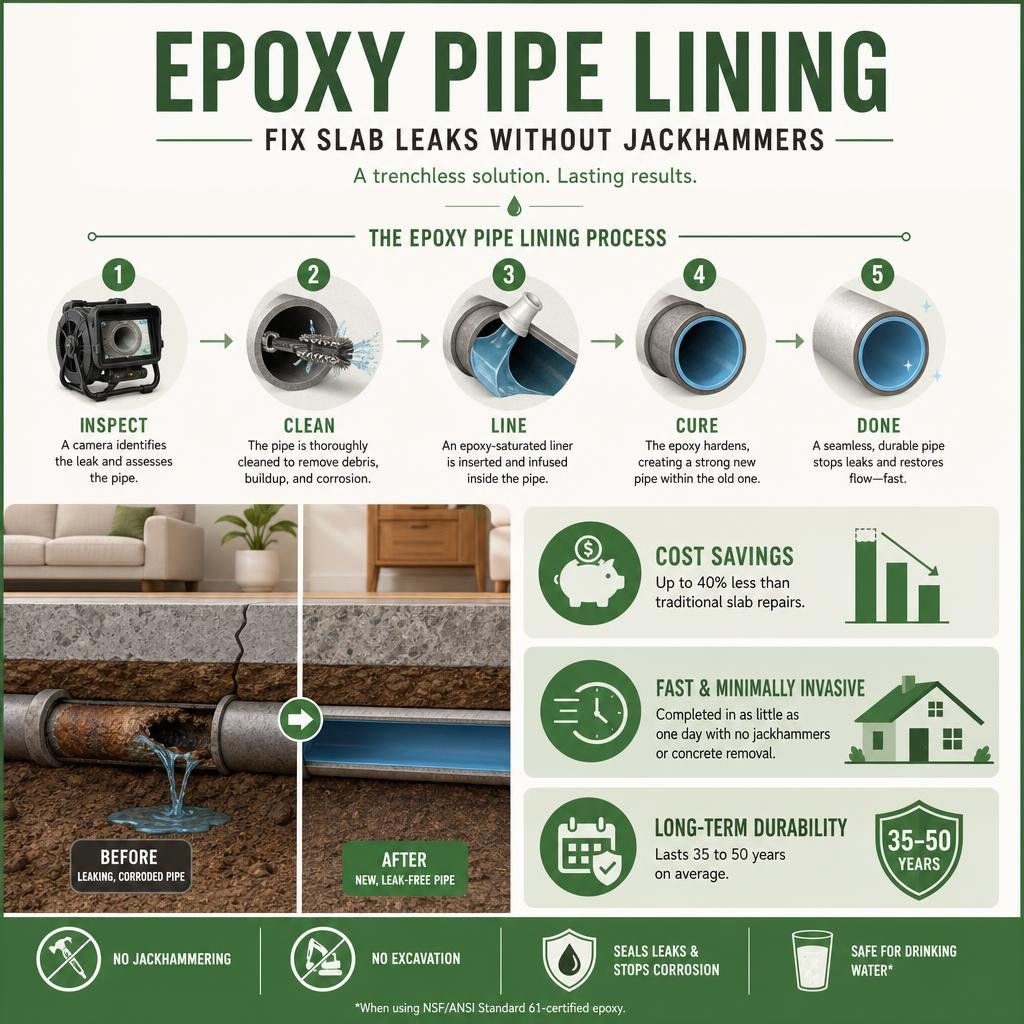
- A trenchless repair method that coats the inside of a damaged pipe with epoxy resin
- Creates a new “pipe within a pipe” that seals leaks and stops corrosion
- No jackhammering, no concrete removal, no major excavation
- Can typically be completed in a single day
- Lasts 35 to 50 years on average
- Costs up to 40% less than traditional slab repair methods
- Safe for drinking water when using NSF/ANSI Standard 61-certified epoxy
If you own a home in the Texas Hill Country, a slab leak is one of the most stressful plumbing problems you can face. The traditional fix, jackhammering through your concrete floor to reach the broken pipe, means days of disruption, major mess, and a repair bill that can run into the tens of thousands of dollars. Epoxy pipe lining changes that equation entirely, giving homeowners a fast, minimally invasive path to a permanent repair.
At Holloway Plumbing, our experienced team has seen how epoxy pipe lining slab leak repairs have transformed outcomes for Hill Country homeowners, turning a week-long nightmare into a same-day solution. Let’s walk through everything you need to know to make the right call for your home.
What is an Epoxy Pipe Lining Slab Leak Repair?
To understand how we fix a slab leak with epoxy, we first have to understand what a slab leak actually is. Put simply, a slab leak occurs when the water or sewer lines running beneath your home’s concrete foundation break, crack, or develop pinhole leaks. Because these pipes are encased in or buried under thick concrete, getting to them has historically been a destructive, noisy process.
Enter epoxy pipe lining. Also known in the industry as cured-in-place pipe (CIPP) or spray-in-place pipe (SIPP) technology, this is a modern form of trenchless pipe restoration. Instead of digging up the old, damaged pipe, we use the existing pipe as a host and build a brand-new, structurally sound pipe directly inside it.
By utilizing existing access points (such as cleanouts or manifold connections above the floor), we can completely restore the integrity of your underground lines. This means we can seal off pinholes, bridge cracks, and stop active leaks without touching a jackhammer.
Before we can even talk about lining, however, we have to know there is a leak in the first place. Recognizing the early warning signs can save you thousands in foundation repairs. We always recommend homeowners keep an eye out for hot spots on the floor, unexplained hikes in the water bill, or the sound of running water when all faucets are off. Our team handles urgent slab leak repair for homeowners who need fast answers when those warning signs appear.
For more context before a leak becomes an emergency, our blog explains how to recognize the signs of a slab leak and how to spot a slab leak before an emergency so you can act before foundation damage spreads.
How the Epoxy Pipe Lining Slab Leak Process Works
The beauty of a trenchless epoxy pipe lining slab leak repair is that it is highly systematic and requires zero destructive digging. As of June 2026, the technology has become so refined that we can restore a single line in a matter of hours. Here is how our team at Holloway Plumbing executes the process step-by-step:
- CCTV Camera Inspection & Diagnostics: We begin by inserting a high-definition sewer camera into the line. This allows us to visually inspect the interior of the pipe, locate the exact point of the leak, and evaluate the overall structural integrity of the line.
- System Isolation & Drying: Once the leak is mapped, we isolate the problematic pipe segment. We drain the water out of the system and blow dry, heated air through the pipe to completely remove all internal moisture.
- Mechanical Descaling & Cleaning: To ensure the epoxy adheres perfectly to the pipe walls, we must clean the pipe down to its original material. We use mechanical descaling tools (like carbide chain cutters) or pressurized air mixed with an abrasive grit (like corundum) to scrub away rust, scale, and corrosion. This process restores the pipe’s original diameter and creates an “anchor tooth” texture that helps the epoxy bond structurally.
- Epoxy Resin Application:
- For potable water lines: We use SIPP (spray-in-place pipe) technology. We blow or spray a liquid epoxy resin through the pipe, spreading it evenly across the interior walls to create a smooth, glass-like barrier that seals pinholes.
- For sewer and drain lines: We typically use CIPP (cured-in-place pipe) lining. We saturate a felt or fiberglass liner with epoxy resin, pull or push it into the pipe, inflate an internal bladder to press the liner against the pipe walls, and let it cure.
- Curing: The epoxy is allowed to cure. Depending on the specific system used, curing can take anywhere from a couple of hours to a day.
- Final Inspection & Reassembly: Once cured, we remove the bladder (if used) and run our CCTV camera through the pipe one last time to verify a seamless, jointless, and 100% leak-free finish. We then reassemble the fixtures and turn your water back on.
For homeowners facing active leaks, Holloway Plumbing also provides emergency plumbing repairs throughout the Texas Hill Country, so slab leak concerns can be evaluated quickly and matched with the right repair approach.
Compatible Pipe Materials for Trenchless Repair
One of the most common questions we get from homeowners in Kerrville, Fredericksburg, and Boerne is: “Will this work on my old pipes?”
The short answer is yes. Epoxy pipe lining is highly versatile and compatible with almost all standard residential and commercial piping materials, including:
- Copper Pipes: Highly susceptible to pinhole leaks caused by formicary corrosion and hard water, copper lines under concrete slabs are prime candidates for spray-applied epoxy coatings.
- Cast Iron: Older homes in the Hill Country often feature cast iron sewer lines that rust, scale, and crack over time. Mechanical descaling followed by epoxy lining can restore these rough pipes to a smooth, free-flowing state.
- PVC & ABS: Even plastic pipes can crack due to shifting foundation soil. Epoxy liners bond exceptionally well to PVC, sealing cracks without excavation.
- Galvanized Steel: Notoriously prone to internal rusting and clogging, galvanized water lines can be cleaned and lined to prevent future corrosion.
Whether you are dealing with pressurized potable water lines or gravity-fed sewer lines, trenchless technology can restore them. If you suspect your underground lines are failing, our specialized team provides reliable sewer and water line plumbing in Kerrville to diagnose and repair the issue promptly.
Epoxy Pipe Lining vs. Traditional Slab Leak Repair
When you discover a slab leak, you generally have two main choices: the traditional “dig and replace” method or trenchless epoxy lining. To help you weigh your options, we have put together a direct comparison of how these two approaches stack up side-by-side:
| Feature | Epoxy Pipe Lining | Traditional Slab Repair (Repiping / Excavation) |
|---|---|---|
| Method | Accesses pipe from existing entry points; coats interior with resin. | Jackhammers concrete floor, digs out dirt, and replaces physical pipe. |
| Disruption | Minimal. No flooring or concrete is destroyed. | Extreme. Involves heavy noise, dust, open trenches in your home, and temporary displacement. |
| Time to Complete | Typically 1 to 2 days. | 5 to 10 days (plus weeks of remodeling/flooring replacement). |
| Secondary Damage | Nearly 0% (minimizes secondary damage by up to 95%). | High. Requires replacing concrete, flooring, drywall, and sometimes landscaping. |
| Lifespan | 35 to 50 years (up to 80 years in accelerated lab testing). | 50+ years (depending on the replacement pipe material used). |
| Total Project Cost | Lower overall cost (saves up to 40% when factoring in restoration). | High total cost due to extensive post-plumbing concrete and cosmetic repairs. |
Traditional repairs often make sense if a pipe has completely collapsed or if you are already planning a major remodel that involves tearing up your floors. However, for older homes, the structural risks of jackhammering can be significant.
We often discuss these structural challenges with homeowners dealing with slab leak detection issues in older houses. Before committing to an invasive repair, it is critical to determine the exact state of your plumbing. We can help you figure out how to tell if a slab leak needs repair or if an alternative solution is available.
Cost and Time Efficiency of Trenchless Solutions
The major advantage of epoxy lining comes down to two resources: your time and your money.
Traditional slab leak repairs require a team to haul a jackhammer into your living room, kick up decades of concrete dust, dig a trench through your foundation, swap out the pipe, pour new concrete, and leave you to hire a flooring contractor to patch up the mess. This process can easily displace your family for a week or more.
With an epoxy pipe lining slab leak repair, we bypass the destruction. Because we do not have to dig, epoxy pipe lining reduces expenses by up to 40% compared to traditional methods that involve digging and replacing pipes. While the plumbing equipment and resins themselves are high-tech, you save thousands of dollars by avoiding foundation reconstruction, new tile or hardwood installation, and hotel stays.
Additionally, because we do not have to excavate, we minimize secondary damage by up to 95%, preserving the structural integrity of your home’s foundation. Most residential lining projects in the Hill Country can be completed in a single day, allowing you to return to normal life with minimal interruption. To learn more about how this works, read about the incredible difference that minimally invasive pipe repairs can make for your property.
Benefits and Limitations of Epoxy Lining for Foundation Leaks

Like any plumbing technology, epoxy lining is an incredible tool, but it is not a magic wand for every single scenario. Understanding both its strengths and its boundaries will help you make an educated decision for your home.
The Benefits:
- Corrosion Prevention: Epoxy creates an inert barrier between the water and the metal pipe. This completely stops the chemical reactions that cause pitting, scaling, and pinhole leaks.
- Root Intrusion Resistance: Because cured epoxy liners are seamless and jointless, they eliminate the tiny seams where tree roots typically find their way into sewer lines.
- Improved Flow Capacity: The interior surface of a lined pipe is incredibly smooth, reducing friction. This glass-like finish actually improves hydraulic flow and prevents waste or scale buildup.
- Preserved Structural Integrity: Avoiding jackhammers means your concrete slab remains intact, preventing structural settling issues down the road.
If you are located in Fair Oaks Ranch, Boerne, or Comfort, we provide expert water line evaluations to see if lining is the right fit. For more information on our local services, visit our page on water line repair in Fair Oaks Ranch TX.
When is an Epoxy Pipe Lining Slab Leak Repair Not Recommended?
While we love trenchless technology, we pride ourselves on honesty. We will never recommend epoxy lining if we know it will fail. There are specific situations where a traditional repair or a complete repipe is the only viable option:
- Severely Collapsed or Crushed Pipes: Epoxy resin requires a “host pipe” to give it shape. If the pipe under your slab has completely collapsed, flattened, or washed away due to soil erosion, there is nothing left to line.
- Extremely Misaligned Joints: If ground shifting has caused the pipe joints to offset significantly (where one side of the pipe is inches higher than the other), a liner cannot bridge that gap without creating a major flow restriction.
- Severe Backgrade or “Bellies”: If your sewer line has sagged under the slab, creating a low spot that holds water, lining the pipe will not fix the slope. The pipe must be physically excavated and graded correctly to restore proper gravity flow.
Before deciding on a repair path, we highly recommend weighing the pros and cons of trenchless sewer repair to see which method matches your home’s specific plumbing layout.
Frequently Asked Questions About Epoxy Pipe Lining
Is epoxy pipe lining safe for drinking water?
Yes, absolutely. When performing an epoxy pipe lining slab leak repair on potable (drinking) water lines, we use specialized, food-grade epoxy resins that are rigorously tested and certified to meet NSF/ANSI Standard 61.
Once the epoxy cures, it becomes completely inert, non-toxic, and stable. It can also help protect water quality by creating a barrier between your drinking water and old, corroded pipe walls that may otherwise contribute to metal leaching. For the safest results, always work with a licensed plumbing team experienced in potable water line repairs.
How long does epoxy pipe lining last under a concrete slab?
Epoxy-lined pipes are built for the long haul. On average, epoxy-lined pipes can last at least 35 to 50 years, with some high-quality materials engineered to extend the life of your plumbing system by up to 50 years. In accelerated laboratory testing, cured epoxy coatings have shown a potential lifespan of up to 80 years.
This makes it a highly durable, permanent solution rather than a temporary patch. If you are dealing with an urgent leak and want a long-term fix, Holloway Plumbing can evaluate the line and recommend the right trenchless repair option for your home.
How much does epoxy pipe lining cost compared to repiping?
While the upfront cost per foot for epoxy lining equipment and resin is higher than standard copper or PEX pipe, the total project expenses tell a very different story.
When you factor in the cost of hiring contractors to pour new concrete, patch drywall, and replace expensive tile or hardwood flooring, traditional slab excavation is often significantly more expensive. In fact, for complex commercial or historical residential properties, epoxy pipe lining can be nearly eight times less expensive than conventional pipe rehabilitation projects when factoring in total restoration costs. For minor, localized issues under your foundation, spot repairs can often be completed with a trenchless point repair starting at a fraction of the cost of a full repipe.
For an accurate quote tailored to your home’s layout, schedule an on-site camera inspection with Holloway Plumbing.
Conclusion
A slab leak doesn’t have to mean destroying your home’s beautiful floors or dealing with days of messy construction. With modern epoxy pipe lining slab leak repairs, we can restore your pipes from the inside out, saving you time, money, and unnecessary stress.
At Holloway Plumbing, we have spent nearly 50 years providing reliable, fast, and expert service to our neighbors throughout the Texas Hill Country, including Kerrville, Fredericksburg, Boerne, Bandera, and Fair Oaks Ranch. We combine decades of local experience with the latest trenchless technologies to give you peace of mind and plumbing that lasts.
Don’t wait for a small leak to cause major foundation damage. Contact our professional slab leak repair technicians to schedule an evaluation with Holloway Plumbing.