


What Your Water Heater Is Trying to Tell You
A water heater making noise is one of the most common plumbing concerns homeowners face, and the sound is almost always trying to tell you something.
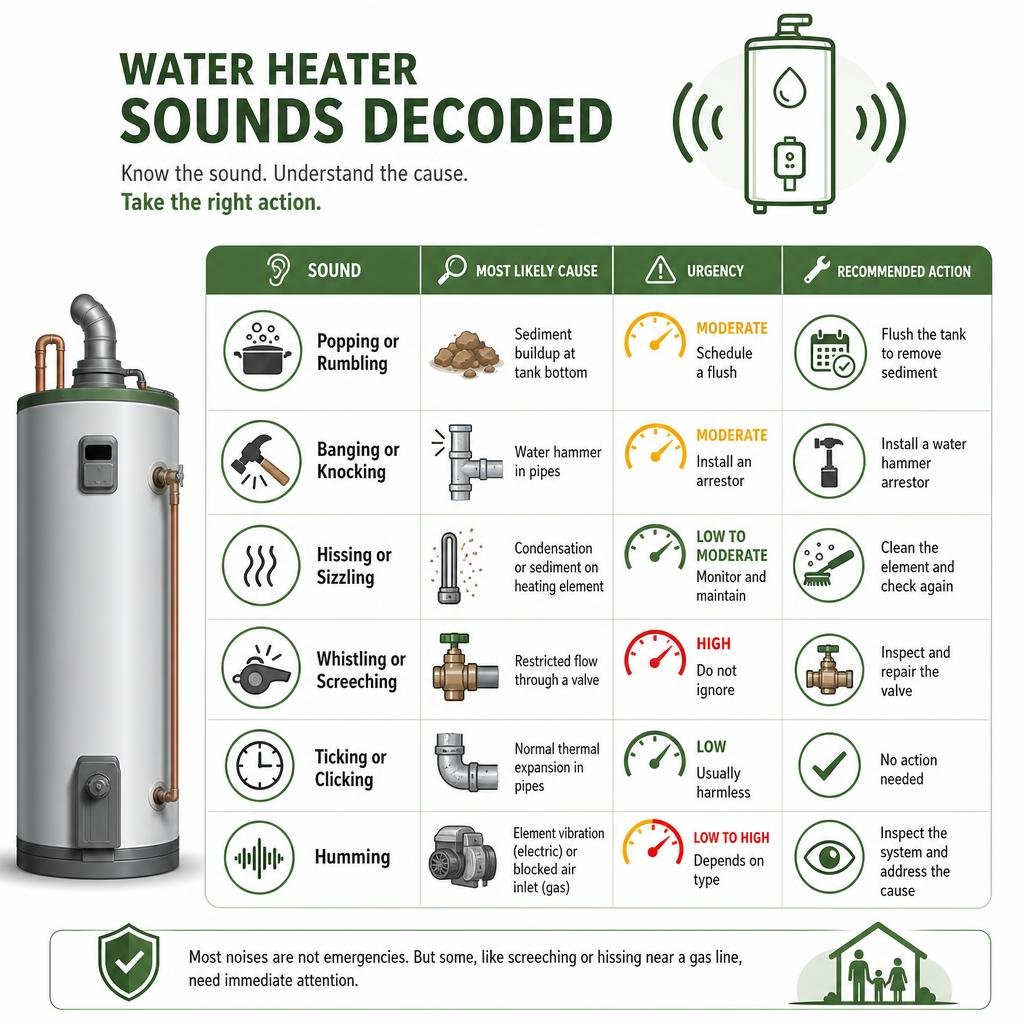
Here is a quick breakdown of the most common water heater sounds and what they typically mean:
| Sound | Most Likely Cause | Urgency |
|---|---|---|
| Popping or rumbling | Sediment buildup at tank bottom | Moderate, schedule a flush |
| Banging or knocking | Water hammer in pipes | Moderate, install an arrestor |
| Hissing or sizzling | Condensation or sediment on heating element | Low to moderate |
| Whistling or screeching | Restricted flow through a valve | High, do not ignore |
| Ticking or clicking | Normal thermal expansion in pipes | Low, usually harmless |
| Humming | Element vibration (electric) or blocked air inlet (gas) | Low to high, depends on type |
Most noises are not emergencies. But some, like screeching or hissing near a gas line, need immediate attention.
This guide walks you through every sound, what causes it, and what to do about it. If you live in the Texas Hill Country, where hard water is common, you are especially likely to run into sediment-related noise issues earlier than most.
At Holloway Plumbing, our team of skilled plumbers has nearly 50 years of hands-on experience diagnosing and repairing noisy water heaters across Kerrville, Fredericksburg, Boerne, and the surrounding Texas Hill Country. We have seen how a water heater making noise can go from a minor annoyance to a costly failure when left unchecked. Let’s decode what your system is telling you.
Decoding the Sounds of a Water Heater Making Noise
When you are relaxing at home, the last thing you want to hear is a loud bang, a strange hiss, or a low rumble echoing from your garage or utility closet. Your water heater is not designed to be a musical instrument, so when it starts performing a solo, it is time to pay attention.
These sounds are actually diagnostic signals. Because your plumbing system is a closed, pressurized environment, changes in temperature, pressure, and physical wear manifest as distinct acoustic patterns. By learning to identify these sounds, you can catch minor issues before they turn into major flooding events.
| Noise Type | Common Cause | Primary Fix |
|---|---|---|
| Loud Popping | Superheated water trapped under sediment | Flush the tank |
| Low Rumbling | Thick sediment layer rolling during heating | Deep clean and descale |
| High-Pitch Screech | Partially closed valve restricting water flow | Open valve fully or replace |
| Metallic Banging | Water hammer shockwaves | Install a water hammer arrestor |
| Sizzling / Hissing | Condensation on gas burner or buried electric elements | Drain tank and clear element |
| Ticking | Pipes expanding against wooden wall studs | Install foam pipe insulation |
Why Is My Water Heater Making Noise with a Popping Sound?
If your water heater sounds like it is making microwave popcorn, you are dealing with the most common plumbing complaint in the Texas Hill Country. This popping or kettling sound is directly caused by sediment buildup at the bottom of your tank.
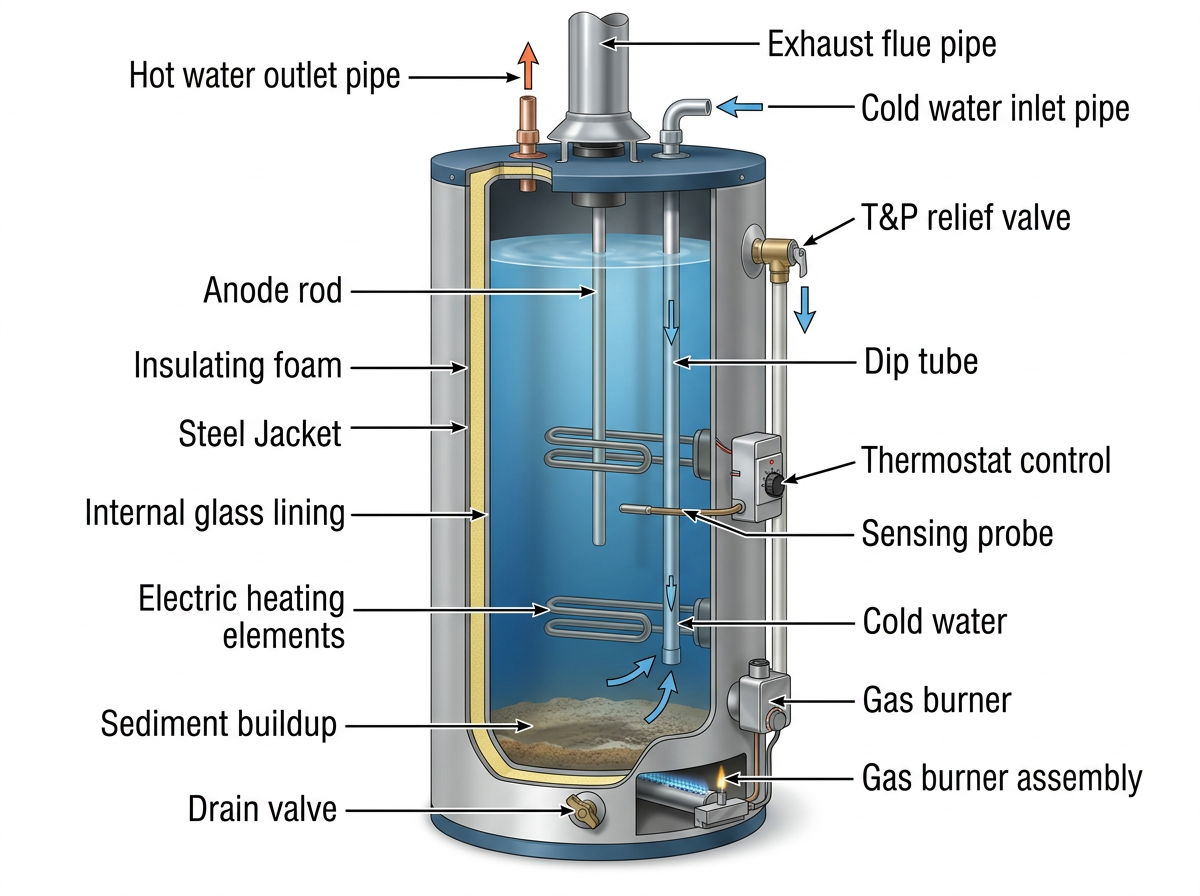
As hard water is heated, dissolved minerals like calcium and magnesium settle out of the water and form a hard, crusty layer of scale at the bottom of the tank. This layer acts as an insulator, trapping a thin pocket of water beneath it. When the burner or electric heating element turns on, that trapped water quickly reaches its boiling point. It superheats, turns into steam, and violently bursts through the sediment layer to escape into the cooler water above. That miniature steam explosion is the popping sound you hear.
Over time, this process places immense physical stress on the steel tank, leading to cracks, leaks, and premature failure. Understanding how mineral scale forms and how it stresses the tank can help you decide when a simple flush is enough and when it is time to call a professional for a closer inspection.
What Causes a Water Heater Making Noise to Screech or Whistle?
A high-pitched screeching or whistling sound is not something you should ignore. This sound is almost always a warning sign of restricted water flow. When water is forced through a tiny, restricted opening under high pressure, it vibrates and produces a loud, whistling noise.
The most common culprit is a partially closed valve. Check the cold-water inlet valve at the top of your tank to ensure it is fully open. If the valve is open but the whistling persists, the restriction might be inside your Temperature and Pressure (T&P) relief valve. The T&P valve is a critical safety feature designed to release water if the tank’s internal pressure or temperature exceeds safe limits.
If the T&P valve is failing, clogged with mineral scale, or trying to relieve dangerous pressure buildup, it may whistle as steam or water escapes through a narrow gap. This requires immediate professional attention to prevent a dangerous pressure buildup. For fast, reliable help with safety-related components, you can contact our team for emergency plumbing repairs for water heaters to secure your home.
Other Common Noises: Hissing, Ticking, and Humming
Not all water heater noises point to immediate doom, but they all have a mechanical explanation:
- Hissing or Sizzling: On a gas water heater, this is often caused by condensation dripping onto the hot burner assembly, which is completely normal during heavy usage cycles. On an electric unit, a persistent hissing sound usually means the lower heating element has become completely buried in sediment, causing it to sizzle as it struggles to heat the surrounding water.
- Ticking or Clicking: This is almost always the result of thermal expansion. As hot water flows through your pipes, the metal or plastic expands and rubs against the wooden framing, joists, or metal support brackets inside your walls. While annoying, it is structurally harmless.
- Humming: Electric water heaters can hum when water flows past the upper heating element, causing it to vibrate. On gas units, however, a loud hum can point to a partially blocked combustion air inlet. Because this can lead to carbon monoxide risks, it should be evaluated by a professional.
The Impact of Hard Water and Sediment on System Lifespan
Here in the Texas Hill Country, communities like Kerrville, Fredericksburg, and Boerne are famous for beautiful limestone landscapes, but that limestone means our tap water is loaded with calcium carbonate. This hard water is the number one enemy of water heater efficiency and longevity.
When hard water scale coats the bottom of a gas water heater, it creates a thick thermal barrier. Instead of directly heating the water, the burner has to heat the thick layer of rock first. This forces the system to run hotter and longer to achieve the same water temperature.
According to a study by the Pacific Northwest National Laboratory, hard water reduced a gas storage water heater’s efficiency from 70.4% to 67.4% in just two years of simulated use. This 3% drop in efficiency translates directly to higher monthly energy bills. Furthermore, the constant overheating of the tank’s bottom degrades the protective glass lining, eventually causing the steel tank to rust and leak.
If you notice a drop in hot water output alongside these noises, it is crucial to monitor your tank for signs of structural failure. You can learn more about identifying these early warning signs by reading our article on why is my water heater leaking.
Troubleshooting and Preventing Water Heater Noises
The single best way to silence a water heater making noise and extend its lifespan is to perform an annual sediment flush. This simple maintenance task washes away the accumulated mineral scale before it can bake into a solid crust.
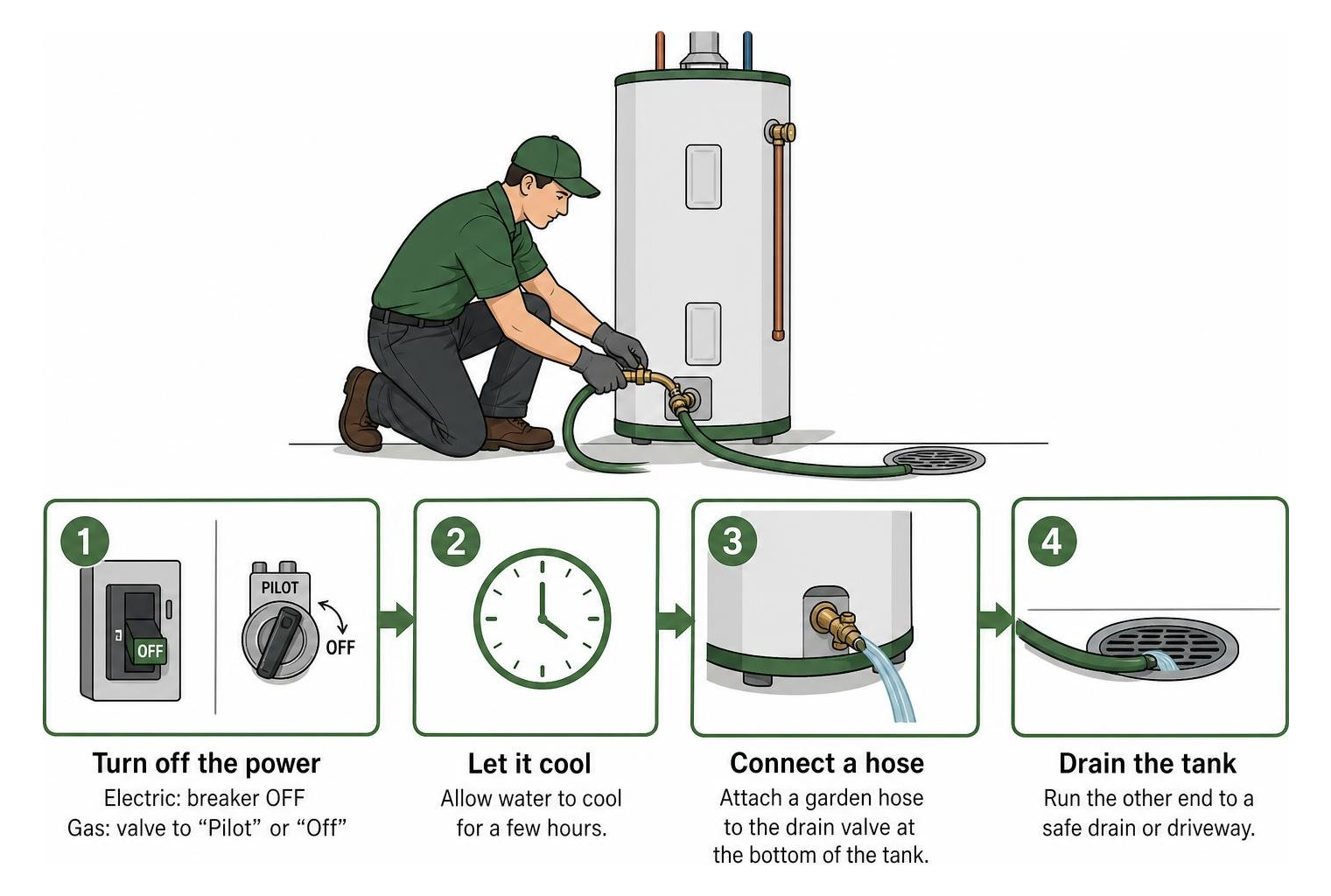
Here is how you can safely flush your tank-style water heater:
- Turn off the power: For electric heaters, turn off the breaker. For gas heaters, turn the gas valve to the “Pilot” or “Off” position.
- Let it cool: Allow the water to cool for a few hours to avoid severe burn risks.
- Connect a hose: Attach a standard garden hose to the drain valve at the bottom of the tank, running the other end to a safe drain or driveway.
- Open a faucet: Turn on a hot water faucet upstairs or in a nearby bathroom to break the vacuum and allow water to drain smoothly.
- Drain the tank: Open the drain valve and let the water run until it flows completely clear of sediment.
- Refill and restart: Close the drain valve, disconnect the hose, turn the water supply back on, and wait for the tank to fill completely before turning the power or gas back on.
If you own a modern, energy-efficient tankless system, the process is slightly different and requires pumping a descaling solution through the heat exchanger. You can find step-by-step instructions and professional tips in our guide on annual tankless water heater maintenance.
To keep your system running silently year-round, we highly recommend installing a whole-house water softener. By removing calcium and magnesium before they ever reach your water heater, you can prevent scale buildup entirely and protect your home’s entire plumbing infrastructure. If you prefer to leave the maintenance to the experts, you can easily schedule a professional flush through our dedicated water heater services in Kerrville TX page.
Frequently Asked Questions About Noisy Water Heaters
Is a noisy water heater dangerous?
In most cases, a noisy water heater is not immediately dangerous, but it is a clear warning sign of reduced efficiency and mechanical stress. However, certain sounds do point to safety hazards.
If you hear a loud, high-pitched screeching or whistling, it could indicate dangerous pressure buildup inside the tank. If this is accompanied by water leaking from the T&P relief valve, you should shut off the water supply and the power source immediately. Additionally, if you hear a hissing sound near a gas water heater and smell a rotten-egg odor, you may have a gas line leak. Evacuate your home immediately and call for emergency assistance.
How long do water heaters typically last?
A standard tank-style water heater typically lasts between 8 and 12 years, while a high-quality tankless water heater can last up to 20 years with proper maintenance.
If your water heater is over a decade old and has started making loud, persistent popping or rumbling noises, the metal has likely suffered significant thermal stress. At this stage, flushing the tank may not resolve the issue, and replacing the aging system may be the most cost-effective way to restore reliable hot water and reduce the risk of a sudden leak.
Why does my water heater make a loud bang when it turns off?
This sudden, metallic banging sound is a phenomenon known as water hammer. It occurs when a valve shuts off quickly, forcing the rushing water to stop instantly. This creates a high-pressure shockwave that travels backward through your plumbing system.
Water hammer shockwaves have measured over 300 PSI, which is more than five times the normal 40 to 60 PSI found in a typical residential plumbing system. These intense pressure spikes can shake your pipes loose, damage connections, and even deform your water heater tank. Installing a simple water hammer arrestor near fast-closing valves, such as those on your washing machine or dishwasher, can safely absorb these shockwaves and protect your plumbing system.
Conclusion
A noisy water heater is your home’s way of asking for help. Whether it is a soft ticking from thermal expansion, a loud pop from Hill Country sediment, or a warning whistle from a pressurized valve, addressing these sounds early will save you money, preserve your comfort, and prevent unexpected plumbing emergencies.
At Holloway Plumbing, we have spent nearly five decades helping families across Kerrville, Fredericksburg, Boerne, and the surrounding Texas Hill Country keep their hot water flowing safely and efficiently. If your system is making strange noises and you want the peace of mind that comes with a professional inspection, click here to schedule professional Hill Country water heater services with our team of licensed experts today.